
So You Bought a House with a Septic Tank: A City Slicker’s Guide to Poop Management
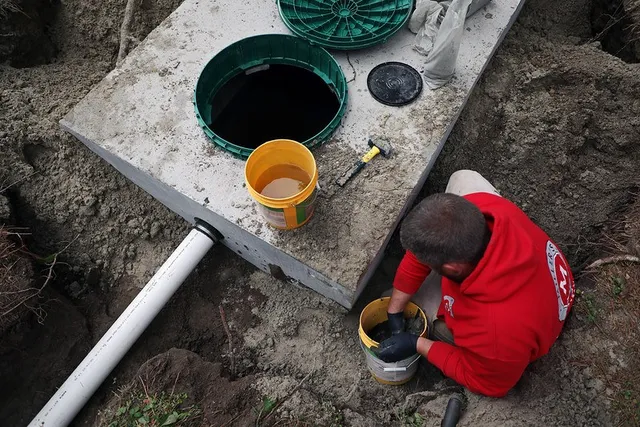
Let’s address the elephant in the room—or rather, the concrete box underground in the yard.
I show beautiful homes all over Harnett and Johnston county every week. Clients walk in, fall in love with the hardwoods, gasp at the acreage, and mentally place their furniture. Then, they see the listing sheet. Their eyes widen. They whisper, terrified:
"Chase… it says Septic System. Is that bad?"
Let me stop you right there. There is a weird stigma among city buyers (I see you, Raleigh folks) that a septic tank is some primitive, dirty technology from the 1800s. It’s not. In fact, for many homeowners in Harnett and Johnston counties, it’s a huge money saver.
The Financial Perk: Why Your Wallet Loves Septic
Before we talk about how it works, let’s talk about why you want one. When you buy a home "in town" (like downtown Angier or Fuquay-Varina), you pay City Taxes + County Taxes. When you buy a home outside city limits with a septic tank, you generally only pay County Taxes.
On a typical $350,000 home, avoiding that city tax rate and the monthly sewer bill can save you roughly $2,300 a year. That’s a vacation. That’s a riding mower. That is real money just for having a tank in your yard.
But wait, doesn’t it cost money to maintain? Yes, but do the math. The average septic tank pump-out in our area costs about $400 and needs to be done every 3 to 5 years. That breaks down to roughly $100 a year in maintenance. You are spending $100 to save $2,300. That is a return on investment any accountant would love.
The "Absolutely Not" Crowd
Now, let’s combat the fear. A septic system is just a personal, on-site water treatment plant. The system relies on bacteria. It’s a living ecosystem. You put waste in, bacteria eat it, and clean water goes out into the drain field. It’s nature doing its thing. It doesn’t smell (unless it's broken), and it doesn’t require you to wear a hazmat suit.
Can I Have a Garbage Disposal?
This is the #1 question I get. And honestly? You really shouldn't.
If you Google "what is safe to put down a garbage disposal," you’ll find a long list of things you can’t put down it: no bones, no pasta, no coffee grounds, no eggshells, no grease, no vegetable peels. If you read closely, the only thing you can safely put in a garbage disposal is water and your own disappointment.
On a city sewer, you can get away with being a little reckless because the clog becomes the city's problem eventually (but if they find you've been flushing artificial turf or old dentures, you're going to get a bill). On a septic system, you are the city.
- Grease is the enemy: Just like when you're on city sewer, bacon grease (any grease for that matter) creates a "scum layer" and can clog your field lines.
- Solids don't break down: Bacteria eat biological waste. They do not eat orange peels or chicken bones. Those solids sit in the tank, filling it up faster and costing you more frequent pump-outs.
The Verdict:
My advice? Skip the disposal entirely. It’s just a grinder that turns your money into sludge. Use a trash can, get a dog (just kidding... sort of), or better yet, start a compost pile... your garden will love it!
The Bottom Line
Don’t let a septic tank scare you away from your dream home. In exchange for being mindful about what you pour down the sink, you get no monthly sewer bill and usually a bigger, more private lot.
Just scrape your plate, skip the disposal, and enjoy the extra $2,000 in your pocket.
Categories
Recent Posts